
Few stories create as much demand for real-time coverage as elections. Readers want projections as soon as the polls close, context when they join the story hours later and a place to understand and discuss the final result. Live blogs are built to support that entire journey.
With the US midterm elections on 3 November 2026 approaching, newsrooms on both sides of the Atlantic are finalising how they will cover election night and the days that follow.
This guide covers the full election coverage cycle: planning ahead, choosing software that can handle peak traffic, structuring the feed around different reader needs, inviting audiences to participate and continuing the conversation after the votes are counted. Along the way, we share practical examples from newsrooms of every size - from national publishers to local papers covering mayoral races.
.webp?width=1100&height=689&name=Hubspot%20Blog%20Images%20(39).webp)
In this guide:
- Why Use a Live Blog for Election Coverage?
- Before Election Day: Plan the Coverage
- What Your Live Blog Software Needs to Handle
- How to Structure an Election Live Blog for Different Reader Needs
- How to Involve Readers in Election Coverage
- Introduce the Journalists Behind Your Election Coverage
- How to Cover Local and Municipal Elections with a Live Blog
- Continue Your Election Coverage After the Polls Close
- Help Readers Find Your Election Live Blog
Why Use a Live Blog for Election Coverage?
A traditional article captures what is known at a particular moment. An election, however, continues to develop over hours or even days - from the polls closing to the final result and its aftermath. During that time, readers are actively looking for the latest updates, results and explanations.
Live blogs are well suited to this continuous story:
- Real-time updates. Readers can follow results and reactions as they happen instead of waiting for the next article or broadcast.
- Flexible newsroom collaboration. Multiple reporters can contribute from different locations, allowing the team to cover several developments at once.
- A complete timeline. Updates remain in one chronological feed that readers can revisit later - particularly useful when results or claims are contested.
- One central destination. A responsive live blog gives readers one page to return to throughout the coverage, whether they are using a phone, tablet or computer.
- Reader participation. Comments, polls, quizzes and questions allow readers to take part in the coverage rather than simply consume it.
In the rest of this guide, we explore how newsrooms can use live blogs to their full potential to reach new readers and build stronger connections with them.
Before Election Day: Plan the Coverage
Election coverage involves more reporters, more simultaneous events and more competing opinions than most stories a newsroom runs. Especially when it comes to such high-traffic events as the US 2026 midterm Elections, planning is everything.
- Brief the team properly. Every contributor should know what they are responsible for and how their work fits with everyone else's. The plan should provide enough structure to keep everyone coordinated, while leaving room to react when the unexpected happens.
- Decide the scope early, because it changes the structure. A live blog covering a single debate is built differently from one running across several days of counting. For longer coverage, plan milestone posts - a highlight slideshow at the top of the live blog would let readers jump to specific moments in the feed, such as a concession speech or a key result.
What Your Live Blog Software Needs to Handle
Election nights are often the traffic peak of the year, with high-performance software being a prerequisite for newsrooms. Midterm night is one of the few occasions when a news site can see its traffic multiply within minutes of polls closing. Before you commit to a tool, check it can do the following:
- Fast short-form updates. Getting a line of text live while it is still relevant is the core job. Anything that adds friction here costs you.
- Embedded social content. Social media posts from candidates, reporters on the ground and official accounts add perspective and evidence.
- Third-party and agency content. News agencies such as dpa run their own election live blogs, and their content can be purchased and embedded directly into yours (more on this below).
- Multimedia content. Photos, graphics and short clips engage readers and hold attention far better than text alone, and give readers a fuller picture of events.
- Scalable and resilient infrastructure. Election traffic can rise sharply within minutes. Your platform should handle these sudden peaks without requiring the editorial team to intervene. It should also have a reliable fallback system in place, so coverage can continue even if part of the infrastructure fails.
The technology is only one part of trustworthy election coverage. Editorial standards matter just as much: cite the source of every result and projection, provide context about candidates and parties, and use plain language so readers can quickly find and understand the information they need.
How to Structure an Election Live Blog for Different Reader Needs
People arrive at election coverage with different questions. Some want the latest results at a glance. Others are looking for an explanation of what those results mean. And some want to follow every development as it happens.
A well-structured election live blog should serve all three without making readers search through a long feed for the information they need.
Help readers find the most important election updates
During its US election coverage, DER SPIEGEL used a highlight slideshow feature at the top of its live blog. Editors could pin key updates there, giving readers a quick overview of the biggest developments.
Readers looking for a fast update could simply browse the highlights. Those interested in a particular result, speech or turning point could jump directly to the relevant post. Meanwhile, the complete feed remained available for anyone who wanted to follow the full story.
Point readers to context without losing them
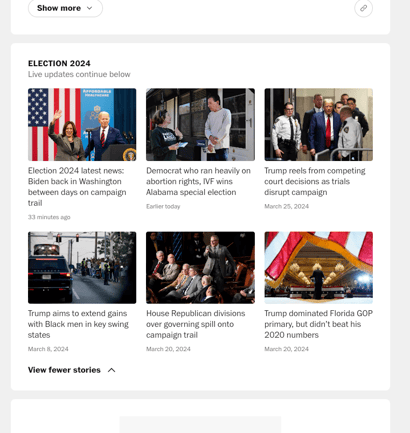
The Washington Post dedicates a section of its election live blog to related articles for readers who want background. This way, they are providing more context to the readers that are evidently already interested in the topic, at the same time increasing the retention rate on the website.
How to Involve Readers in Election Coverage
A sense of powerlessness is one of the main reasons people turn away from news. Election coverage can often feel distant and one-sided - more like a monologue than a conversation. But when publishers give readers a chance to participate and make their voices heard, politics suddenly feels much closer to home.
When readers feel seen and heard, they’re more likely to connect with the coverage - and return to the publication for that experience again.
Invite readers to submit their election questions
Ahead of a mayoral election in Pegnitz, Nürnberger Nachrichten created a live blog in which all four candidates answered questions submitted by local readers. The newsroom also published short videos featuring quick yes-or-no questions, with candidates holding up green or red cards to show their answers.
The format worked because it focused on the issues residents genuinely cared about. Instead of repeating party platforms and campaign messages, the coverage addressed practical questions about traffic, childcare, city finances and cooperation within the council.
Inviting readers to shape the questions made the election coverage more relevant and turned political reporting into a two-way conversation.
Use moderated comments to involve readers
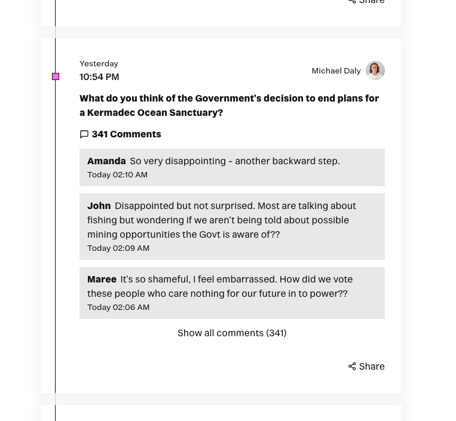
Comment sections are less common in political coverage, which made Stuff’s decision to include one in its politics live blog stand out. The newsroom invited readers to share their views on a government decision and received more than 340 responses within one day!
Placing the discussion within the live feed, rather than at the very end, makes it part of the coverage. After contributing, readers may be more likely to continue scrolling and follow the next developments.
However, political comment sections can become heated quickly. Before opening one, put three safeguards in place:
- Be transparent. Explain how comments will be moderated and clearly state which types of contributions will not be published.
- Set the rules in advance. Tell readers when the comment section will open and close, and whether they need to use their full names rather than nicknames.
- Involve your reporters. Encourage journalists to join the discussion, answer questions and provide context. Their presence can reduce incivility and help keep the conversation constructive.
Other simple formats for reader participation:
- Run quick polls that take one tap - "who won the debate?"
- Invite readers to submit claims they would like the newsroom to fact-check.
- Ask what readers are seeing locally, such as queues or problems at polling stations.
Introduce the Journalists Behind Your Election Coverage
People connect with people. During a high-stakes event such as an election, showing readers who is reporting the story can build trust and make the coverage feel more personal.
Traditional articles offer limited space for a journalist’s voice and personality. A live blog’s more conversational format creates more opportunities to introduce reporters, explain their roles and show where they are reporting from.
Different ways of introducing the reporter team
There are two effective approaches:
- Pinned at the top: The Washington Post introduces its reporters at the beginning of its election live blog. Readers can click through to each journalist’s author profile to learn more about them and explore their previous reporting.
- During the coverage: Augsburger Allgemeine introduced its journalists midway through the live feed and explained which party each reporter was covering. Adding these introductions later in the evening broke up the flow of updates, brought fresh energy to the coverage and gave readers a clearer sense of the people behind it.
.svg)
Showing faces behind the live coverage helps establish trust and connection with readers from early on. As the same faces and bylines appear throughout the night, the live blog begins to feel less like an anonymous stream of updates and more like a team of familiar journalists guiding readers through the results.
Add small human details
You can also bring reporters into the story by:
- Including their role and location in the byline.
- Sharing observations from campaign events or watch parties.
- Offering brief glimpses into the newsroom as results arrive.
These details make the reporting process more visible without distracting from the election itself.
How to Cover Local and Municipal Elections with a Live Blog
Live blogs are often associated with national elections, but the format can be just as valuable for local races. The scale may be smaller, but readers still want fast results, reliable updates and information that relates directly to their community.
Focus on the details local readers need
Märkische Allgemeine’s coverage of regional mayoral elections offers a useful example. Instead of trying to recreate a national-scale production, the newsroom focused on short updates, quotes and local details.
Alongside the headline results, it shared turnout figures and candidate-level data -information that may receive little attention nationally but matters to people living in the district.
Combine agency content with local reporting
Smaller newsrooms do not need to produce every update themselves. Agencies such as German Press Agency (dpa) provide election live blogs that publishers can purchase and embed within their own coverage.
Agency updates can provide a reliable foundation. Your newsroom can then add local reporting, analysis and commentary to create coverage readers cannot find elsewhere.
Continue Your Election Coverage After the Polls Close
Traffic may slow once the results are confirmed, but readers are not finished with the story. They still want to understand what happened, what it means for them and how others are reacting.
Without a dedicated space, much of that conversation moves to social media, where useful perspectives can quickly become buried beneath arguments, misinformation and spam. A moderated live blog gives readers a more constructive place to respond - and allows journalists to add context or correct misleading claims within the discussion.
Give readers space to process the result
After the state elections in Thuringia and Saxony, MDR moved away from the standard breaking-news format and launched a live blog dedicated to reader reactions. It invited people to share their hopes, concerns and responses to the results, generating 127 comments from readers across the political spectrum.
-min.svg)
Show what the result means to individual voters
Die Zeit covered the same elections from a different angle. It followed five voters of different ages and political views throughout the evening, sharing their routines, reactions and concerns as the results emerged.
By focusing on individual voters rather than political analysis alone, the coverage helped readers understand the result through personal perspectives and reflected a wider range of experiences within the electorate.
Other ways to keep post-election coverage engaging
- Explain what happens next. Outline the process of forming a government, the likely policy implications and the key legislative dates ahead.
- Fact-check claims gaining attention. Address misleading statements, rumours and viral social media posts that emerge after the result.
- Show readers what the newsroom is doing. Explain how the team analysed the results overnight, which questions remain unanswered and what reporters are investigating next.
Continuing the coverage also shows readers that your newsroom is committed to the full story - not only the headline result. By helping people understand both the election and its aftermath, you can build trust and give them a reason to return as the story develops.
Help Readers Find Your Election Live Blog
A live blog only delivers value if readers can find it while the election is still unfolding. That is partly an editorial job and partly a technical one.
Make it easy to find on your website
Link to your election live blog from related articles, the homepage and other high-traffic pages. A teaser widget is particularly useful here: it can display the latest updates across your website and lead readers directly into the live coverage.
A September 2026 update also introduced autoplay for Tickaroo’s teaser widget. It automatically moves through the featured updates, adding motion to the page and helping the live coverage catch readers’ attention as soon as they arrive.
Make the content visible to search engines
A live blog grows throughout the event. Each update adds timely information, names, results and context to the same page - often matching the questions readers are actively searching for. This gives search engines more useful content to discover while giving readers a reason to stay, return and explore related coverage.
To benefit from this dynamic content, the posts must be delivered in a format search engines can read. Features such as HTML or Styled Prefetch make updates available without relying entirely on JavaScript, while structured data helps search engines understand the page and recognise its content as a live blog.
Longer reading times are not a direct SEO shortcut. However, regularly updated content and sustained reader engagement can contribute to a useful, high-quality page experience. With the right technical setup, your live blog can attract search traffic while election interest is at its highest - and continue to provide value after the results are confirmed.
Conclusion
There is no single formula for successful election coverage. But the newsrooms doing it well tend to follow the same principles: they plan early, make important updates easy to find and let readers choose how deeply they want to explore the story. They also create meaningful opportunities for participation, show the people behind the reporting and continue providing context after the results are announced.
A live blog brings all of this together in one place. It combines real-time updates, audience interaction, analysis and storytelling in a format readers can follow as events unfold - or return to later for the full picture.
Want to Improve Your Live Election Coverage?
Curious how Tickaroo could support your newsroom?
Fill out the form below to learn more about our live blog software and how it can help you deliver fast, reliable and engaging election coverage.